How to Care for Tape-In Hair Extensions to Maximize Lifespan
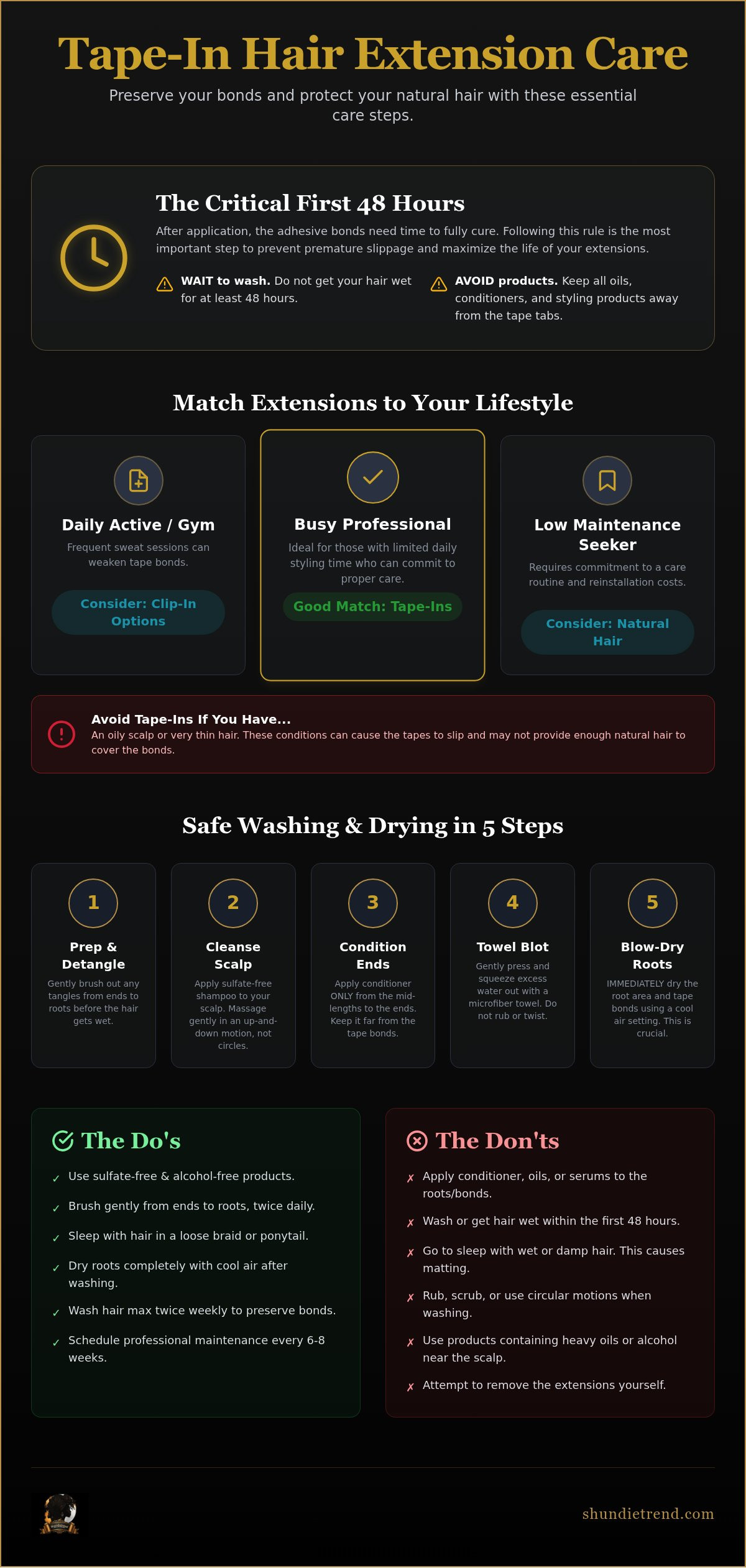
TL;DR: To care for tape in hair extensions, wait 48 hours before washing and keep all oil-based products away from the adhesive bonds.
- Schedule professional maintenance every 6 to 8 weeks to manage natural hair growth.
- Avoid tape-ins if you have an oily scalp or thin hair to prevent slippage.
- Wash hair twice weekly using sulfate-free shampoo applied in gentle up-and-down motions.
- Dry roots immediately with cool air because moisture trapped in tapes causes severe matting. To preserve adhesive strength and maximize lifespan, wait 48 hours before your first wash and keep oil-based products away from the tape tabs. Daily maintenance requires gentle brushing from ends to roots and sleeping with braided hair to avoid matting. Before you commit, weigh three decisions: does tape-in care fit your weekly routine, can you follow the wash timing and product limits that protect the bonds, and is your scalp strong enough for this method rather than a removable option?
Match Tape-Ins to Your Routine So Bonds Last Through Real Life
Tape extensions fit active schedules when you commit to regular professional maintenance. Fitting your hair choice to your routine avoids quick damage. Proper care keeps your biological hair healthy while preserving tape bonds (adhesive attachment points).
Segment guide: three common situations and what works from the care rules below.
- Gym or daily workouts: choose clip-in options you can remove before sweat sessions, then follow easy-removal care rather than fixed tapes.
- Full work weeks with limited styling time: tape-ins suit you if you protect tape bonds, brush gently twice daily, and book removal every six to eight weeks.
- Low-effort days when you want minimal upkeep: stay with natural hair and simple washing until you can take on reinstallation fees and bond care.
If you want temporary length for special events, learn How to Wash Clip-In Hair Extensions: The 2026 Ultimate Care before choosing permanent methods. Daily wear needs steady attention compared with occasional styling. Think of tape extensions like a delicate silk blouse that needs gentle handling rather than rugged gym wear.
| Lifestyle Routine | Best Extension Match | Care Focus |
|---|---|---|
| Daily Active / Gym | Clip-in Options | Easy Removal |
| Busy Professional | Tape-in Method | Tape Bonds Care |
| Low Maintenance | Natural Hair | Simple Washing |
Washing hair (cleansing extensions) too often weakens the hold. Use a soft hair brush (extension-safe detangling tool) twice daily. Plan for taking out extensions (extension removal) every six to eight weeks, and budget for the ongoing maintenance cost (reinstallation fees) so the style stays fresh without rushed reinstalls.
Give New Tape Bonds 48 Hours Before the First Wash
Wait at least 48 hours after application before washing hair for the first time. This delay allows the tape bonds to fully cure and seal properly. Washing earlier weakens the hold and causes premature slippage.
Always use sulfate-free shampoo to protect the polyurethane tabs. Apply shampoo gently between the tracks with an up-and-down motion. Never rub in circles, as friction entangles natural hair (biological hair) near the roots. Treat the adhesive like a sticky note: excess moisture before curing ruins the grip.
According to Wikipedia's 2025 artificial hair integrations entry, proper care of hair extensions prevents damage to the underlying natural strands. Keep conditioner exclusively on the mid-lengths and ends, and pick a formula that supports the style without soaking the tabs. For smooth edges without weakening your tapes, try the Shundietrend Edge Control, Sleek, Flake-Free. Wash gently twice a week. Skip air-drying the roots; use a cool hair dryer instead so moisture does not linger on the bonds.
Tip: Never apply conditioner or natural oils directly to the tape bonds to prevent slipping.
How to Wash and Dry Extensions in 5 Safe Steps
Washing hair safely means keeping moisture away from your tape bonds so they do not slip.
Lean your head back beneath the shower stream rather than stooping forward. Bending forward pulls on natural hair roots and tangles the attachments.
- Prep the strands: Gently brush out tangles using a hair brush before applying any water.
- Cleanse carefully: Apply a neutral shampoo directly to your scalp, massaging gently between the tapes without rubbing the adhesives.
- Condition the ends: Mid-lengths and ends need hydration, so apply conditioner strictly from the middle down. Applying a Silk Mist Spray, Frizz Control for Hair | Repairs, Shine restores softness without damaging your attachments.
- Towel dry: Gently press the water out with a microfiber towel; never rub or twist.
- Blow-dry roots: Dry the root area completely using cool air immediately after washing.
Never sleep with damp hair: wet tapes weaken fast and trapped moisture drives severe matting at the attachment line.
Tip: Always blow-dry the root area on cool air before heat styling to ensure the adhesive stays fully set.
Lightweight, Alcohol-Free Products That Protect Tape Bonds
Lightweight, alcohol-free formulations protect your tape bonds from premature slippage and sticky residue.
In salon work with clients who switched to dedicated extension care, panels stayed secure for weeks longer than with drugstore alternatives. Situation: heavy oils and generic products were softening the hold. Solution: move to extension-safe cleansers and keep oils off the tabs. Result: secure wear measured in extra weeks before the next maintenance visit. Heavy oils slowly dissolve the glue matrix beneath the tabs. Sulfate-free liquid shampoos clear away scalp sebum without stripping moisture from your natural hair.
Stick with clarify-safe liquid cleansers for washing hair every three days. Standard heavy conditioners belong strictly on the mid-lengths and ends, far from the roots.
For styling flyaways, use the Shundietrend Hair Wax Stick, Strong Hold, Smooth to tame baby hairs cleanly without touching your bonds.
When brushing, choose a gentle hair brush with flexible loop bristles. Nylon pins grab the top tape edge and rip the panel away; loop bristles glide over the attachment site the way a silk scarf moves over glass.
Keep a dedicated spray bottle filled with lightweight leave-in conditioner for your daily ends routine. Keep an oily solvent formula ready when taking out extensions so you avoid pulling. Specialized products lower future maintenance cost by keeping the hair extensions soft for multiple reinstallations, so daily styling stays controlled and panels hold through the full wear cycle.
Nighttime Habits and Heat Limits That Spare Your Bonds
Protecting your tape bonds during sleep and styling keeps biological hair healthy. Sleeping on a silk pillowcase prevents friction that tugs at the roots.
Hands-on client work shows that tying strands up before bed stops intense knotting. Braiding your hair softly stops nighttime friction from pulling at the attachment points.
Using hot tools directly on the adhesive melts the bond. Apply thermal defense and keep hot plates away from the roots. According to a study on hair structure by PMC in 2022, excessive heat exposure degrades the structural integrity of hair shafts. Keep temperatures under 350°F and ease tension while you style.
Before sleeping, gently run a hair brush through your locks so small knots do not tighten overnight. Root protection supports longer wear and shortens morning styling time.
Skip Tape-Ins When Your Scalp Is Oily, Irritated, or Thin
Avoid tape-ins if you have an oily, irritated, or thin scalp.
Excess oils break down adhesive attachment points (tape bonds) quickly and cause slip. Professional experience shows that delicate natural strands cannot bear this heavy load without risking traction alopecia, and weak roots snap easily under tension.
Taking out extensions can add harm when your scalp is already irritated. Many clients dread this step because they fear real strands will pull out with the sticky tabs.
A gentle, professional solvent dissolves the glue harmlessly. Never yank them yourself: pulling prematurely acts like peeling tape off wet paper and tears biological hair at the follicle. Trained hands limit breakage.
If you suspect your roots are too weak, test a single piece first to monitor your skin reaction, then decide whether tape-ins or a lighter method fit your scalp.
Frequently asked questions
How long do tape in extensions last?
Tape-in extensions typically last six to eight weeks before needing maintenance. Your natural hair growth dictates this timeline. Fast growth moves the tape bonds down too far, so regular appointments prevent damage.
How to sleep with tape in extensions?
Braid your hair loosely or pull it into a low ponytail before bed. Never sleep on wet hair. A silk pillowcase reduces friction and helps prevent tangles.
Can you wash your hair normally with tape in extensions?
Adapt your routine when washing hair with installed tapes. Wash gently in a downward motion without scrubbing the scalp attachment area, use safe gentle products, and keep slippery conditioners off the tapes.
How long do I wait to shower after tape-in extensions?
Wait forty-eight hours before showering or washing your hair after application. The adhesive needs this time to cure. Exposing the attachment areas to water too soon causes slipping, so the wait supports a stable hold.
What products should I use for tape-in extensions?
Use products free from harsh chemicals, oils, and alcohol near the roots. Select lightweight formulas to keep the bonds secure, and brush daily with a hair brush made for delicate strands so home care supports a longer wear cycle.
Taking Care of Your Investment
Caring for tape-in hair extensions keeps biological hair healthy and the look full when you honor the same decisions you started with: routine fit, wash timing and product limits, and scalp readiness.
A steady daily routine protects adhesive attachment points from slipping or matting. Brushing with an extension-safe detangling tool limits breakage. When cleansing extensions, mild formulas help the grip hold. Consistent maintenance reduces what you spend on reinstallation fees over time.
In 2026, long-term wear still needs professional oversight. The Shundietrend team focuses on practical hair care and extension maintenance advice. Schedule a consultation with a certified stylist to evaluate whether your hair suits long-term wear, or contact us for a personalized quote.