K-Tip vs Tape-In Extensions: The 2026 Ultimate Comparison and Buying Guide
The most affordable extension method on the shelf today might actually be your most expensive investment by the end of 2026. It's a common trap. You choose a style based on the initial price tag, only to realize your lifestyle demands more than a quick fix. You want hair that flows, bounces, and stays hidden, even in a high, sleek ponytail. You're likely tired of the constant anxiety over visible bonds or the fear that heavy adhesives are compromising your natural hair health.
We understand that choosing between k-tip vs tape-in extensions feels like a high-stakes gamble with your confidence and your budget. This 2026 guide clarifies the confusion. You'll discover how to match your hair type to the right attachment method for a seamless, natural blend. We'll explore the precision of keratin bonds, the speed of tape-ins, and why raw, cuticle-aligned hair is the only way to ensure 360-degree movement. From maintenance costs to long-term hair integrity, here is everything you need to make a sophisticated, informed investment in your aesthetic.
Key Takeaways
- Understand the technical bond difference between individual keratin fusion and adhesive sandwiching for a secure, natural fit.
- Compare k-tip vs tape-in extensions to see which method supports high ponytails and active lifestyles without visible bonds.
- Identify the best match for your natural texture, whether you need lightweight solutions for fine hair or broad coverage for coarse strands.
- Learn to plan your salon schedule by balancing the 3-6 month longevity of K-tips against the 6-8 week maintenance cycle of tape-ins.
- Discover why 100% raw human hair is the essential foundation for preventing matting and ensuring a flawless, long-lasting blend.
Understanding the Mechanics: K-Tips vs. Tape-In Extensions
Choosing the right extension method in 2026 starts with a clear look at how these systems actually bond to your natural strands. The structural difference between k-tip vs tape-in extensions determines how your hair falls, moves, and feels throughout the day. While both are professional, semi-permanent solutions, they rely on very different physics. One uses individual points of contact for maximum agility. The other utilizes flat, horizontal panels for instant density. Both systems represent advanced forms of artificial hair integrations that have evolved to prioritize scalp health and a discrete finish.
The Anatomy of a K-Tip Bond
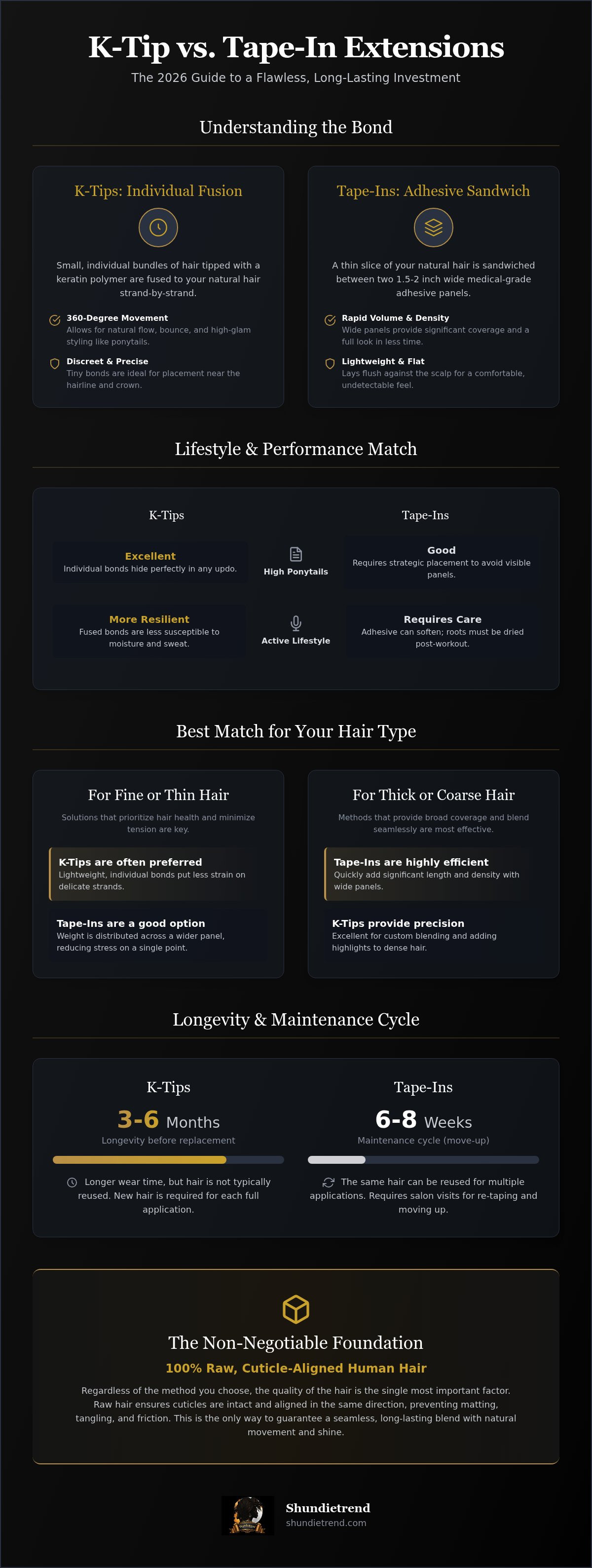
K-Tip extensions consist of small, individual bundles of hair tipped with a keratin polymer. During application, a stylist uses a specialized heating tool to soften this protein-based bond, fusing it around a small section of your natural hair. Because keratin is a natural protein already found in your hair, the bond is incredibly compatible and flexible. The result is a tiny, cylindrical attachment that allows for 360-degree movement. Your hair doesn't just hang; it bounces and flows in every direction. This strand-by-strand precision is ideal for high-visibility areas. You can place them near the hairline or the crown with total confidence. They're the gold standard for anyone who loves high ponytails or intricate updos where traditional tracks might peek through.
The Tape-In Sandwich Method
The tape-in method takes a different approach by sandwiching a thin slice of your natural hair between two adhesive panels. These panels are typically 1.5 to 2 inches wide and utilize a medical-grade, flexible adhesive. The primary benefit here is the "flat-to-head" technology. Because the panels are so thin and wide, the weight of the extension is distributed across a larger section of hair. This makes them feel incredibly lightweight and comfortable. They lay flush against the scalp, remaining virtually undetectable under your top layers. For busy clients, the speed of installation is a major win. You can achieve a full, voluminous transformation in a fraction of the time required for individual bonds. It's a fast, efficient way to add both length and significant density.
To ensure these mechanics perform at their peak, the quality of the hair is non-negotiable. Using premium raw hair bundles ensures that the cuticles remain aligned and intact. This alignment prevents the friction and matting that can occur at the attachment site. Whether you prefer the individual precision of K-tips or the sleek, rapid volume of tape-ins, the longevity of your style depends on the raw integrity of the hair itself. High-quality hair stays smooth, resists tangling, and integrates seamlessly into your daily routine.
Performance and Styling: Which Method Moves with Your Lifestyle?
Your daily routine dictates which extension method will actually survive your schedule. When comparing k-tip vs tape-in extensions, styling versatility is often the top priority for 2026. You want a look that transitions from a professional boardroom setting to a high-intensity gym session without missing a beat. The choice between individual bonds and adhesive panels changes how your hair behaves under pressure. The structural integrity of your chosen method becomes apparent the moment you step into a sauna or a hot yoga class.
High Ponytails and Updos
K-tips are the gold standard for high-glam, versatile styling. Because each bond is tiny and mimics natural hair movement, you can pull your hair into a snatched high ponytail without fear. The individual attachments allow for 360-degree rotation. Tape-ins require more strategic placement. If they're applied too close to the nape or the hairline, the 1.5-inch panels might peek through when you lift your hair. To maintain a flawless, professional finish, we recommend using edge control for sleek styles to blend your natural baby hairs with the extensions for a seamless transition.
The Active Lifestyle: Gym and Sweat
For the dedicated athlete, moisture is a constant variable. Keratin bonds are generally more resilient in humid or high-moisture environments. They don't slip as easily when exposed to sweat because the bond is fused around the hair strand. Adhesive strips in tape-ins can sometimes soften if they stay damp for too long. If you're a heavy sweater, you must dry your roots immediately after a workout to protect the adhesive. Securing your hair in a loose braid or a silk scrunchie helps minimize tension on the bonds during high-impact movement. Choosing between k-tip vs tape-in extensions requires an honest look at your weekly calendar and how much time you can commit to post-workout hair care.
Achieving a perfect blend also depends on your natural texture. Using high-quality Straight Human Hair Bundles ensures that the extensions mimic the luster and weight of your own strands. This is especially vital when wearing your hair down. You want the extensions to move as one cohesive unit rather than separate layers. Investing in premium raw hair is the key to a long-lasting, sophisticated aesthetic that empowers your daily style journey. You can find the ideal foundation for your next transformation at Shundietrend.
The Suitability Scorecard: Matching Methods to Hair Types
Your natural hair is the foundation for any professional transformation. Not every scalp or strand responds the same way to bonding agents. When weighing k-tip vs tape-in extensions, you must evaluate your hair's density, strength, and oil production. A mismatched application can lead to unnecessary tension or visible bonds. Choosing correctly ensures a seamless, healthy integration that empowers your personal style. It's about finding the balance between aesthetic goals and long-term hair integrity.
Best for Fine or Thinning Hair
Fine hair requires a delicate, strategic approach to prevent mechanical damage. K-tips are often the superior choice here because they offer the least amount of tension on fragile follicles. A skilled stylist can customize the bond size, creating micro-bonds for ultra-thin areas like the temples or crown. This precision prevents the extensions from feeling heavy or pulling on sparse sections. Tape-ins, while flat, can sometimes create a "curtain" of weight that fine hair cannot support. Individual keratin bonds allow your natural hair to breathe and move without the strain of a wide adhesive panel.
Best for Thick and Voluminous Goals
If your goal is maximum density and length in record time, tape-ins are a powerhouse solution. Thick or coarse hair has the natural volume required to hide the 2-inch adhesive panels effectively. You can achieve a full, glamorous transformation in under 90 minutes. For a flawless blend, layering Body Wave Hair Bundles provides a soft, natural movement that transitions perfectly from your roots. The broad coverage of the tape panels works with your hair's existing thickness to create a unified, voluminous look that feels secure and lush.
Scalp chemistry also plays a vital role in your success. High oil production can break down the medical-grade adhesive in tape-ins, leading to premature slipping. In these cases, keratin bonds are much more resilient. Texture matching is equally critical for a professional finish. Using a Burmese Curly texture allows those with natural patterns to maintain their look without daily heat styling. This single-donor, raw hair ensures the cuticles remain aligned. This prevents the matting and tangling that often plagues lower-quality extensions. By matching the method to your unique hair profile, you protect your investment and your natural hair health.
Maintenance and Longevity: Protecting Your Investment
The longevity of your look depends entirely on your commitment to a professional maintenance schedule. When evaluating k-tip vs tape-in extensions, the time spent in the salon chair varies significantly. K-tips offer an impressive 4 to 6 month wear cycle. They're a "set it and forget it" favorite for 2026. Tape-ins require more frequent attention. You'll need move-up appointments every 6 to 8 weeks. This difference dictates your long-term budget and how often you'll need to refresh your style. Protecting your investment means understanding these cycles before you commit to an installation.
The Re-Use Factor
The financial breakdown of these methods reveals a distinct contrast in sustainability. Tape-in panels are designed for multiple uses. Your stylist can simply remove the old adhesive, clean the panels, and apply fresh tape to move them back to the root. Because raw hair quality is so high, these extensions can often be reused for up to a year with proper care. K-tips are generally considered a one-time investment. Once the keratin bond is fused and eventually removed, the hair cannot be easily re-bonded. When calculating your "Cost Per Wear," tape-ins often prove more economical over twelve months. K-tips offer the luxury of a longer initial wear period without monthly salon visits.
Daily Care for Tangle-Free Roots
Preventing matting at the attachment site is the secret to a professional, long-lasting blend. You must use a specialized loop brush to navigate around the bonds or tapes without snagging. This keeps the roots clear. It prevents natural shedding from tangling with the extension hair. We also recommend sleeping in a Satin Bonnet to minimize friction and protect the integrity of the bonds overnight. Avoid applying heavy oil-based products near the scalp. These can soften keratin bonds or cause tape adhesive to slip prematurely. Consistent, gentle care keeps your extensions looking fresh and your natural hair healthy.
The success of these maintenance routines hinges on the quality of the hair itself. Raw, cuticle-aligned hair is essential. It prevents the mid-shaft matting that often ruins lower-grade extensions. When the cuticles all face the same direction, the hair remains smooth and manageable throughout its lifespan. Learning how to wash raw bundles correctly ensures you don't strip the hair of its natural luster. To start your journey with the highest quality foundation, explore the premium options at Shundietrend.
Making the Choice: Why Raw Hair Quality Changes the Game
The attachment method is only half the battle for a flawless look. Whether you land on k-tip vs tape-in extensions, your results depend on the raw integrity of the hair. 100% raw human hair is the essential foundation for a professional finish. It's the only way to ensure your extensions remain soft, manageable, and vibrant throughout 2026. Cuticle alignment is the secret to long-term wear. When all cuticles face the same direction, you eliminate the friction that causes matting and tangling at the root. Shundietrend's Raw Hair Bundles provide the luxury foundation necessary for a high-end install.
Texture Matching with Shundietrend
A professional blend requires an exact texture match for a seamless transition. You can choose from Straight, Body Wave, or Burmese Curly to mirror your natural pattern perfectly. Our single-donor hair offers a unique advantage. It ensures uniform color, weight, and texture across every strand. These raw human hair bundles hold styles longer than processed alternatives. They respond to heat and moisture just like your own hair. This makes your daily routine effortless. You get a natural, cohesive aesthetic that empowers your style journey.
Final Verdict: Which Should You Book?
Your decision ultimately rests on your lifestyle goals and hair needs. We've summarized the choice into a simple checklist to guide your next salon visit. Consider the following factors before you purchase your bundles:
- The K-Tip Client: Prioritizes 360-degree movement, high ponytails, and long wear cycles of up to six months. Ideal for fine hair and precise placement.
- The Tape-In Client: Seeks a fast 90-minute installation, instant volume, and a method that allows for reusable hair. Best for those who prefer more frequent move-up appointments.
We always recommend a professional consultation before you commit to a specific method. A stylist can assess your scalp health and density to confirm the best fit for your natural strands. Once you have your plan, secure the highest quality materials for your transformation. Shop Premium Raw Hair Bundles for Your Next Install and experience the difference of raw, cuticle-aligned hair that lasts.
Elevate Your Aesthetic for 2026
Choosing between k-tip vs tape-in extensions is the first step toward a transformative style journey. You now understand that while K-tips offer 360-degree movement and longevity, tape-ins provide a fast, voluminous solution for a busy schedule. The most critical factor remains the quality of the hair you install. A professional method only succeeds when built on a premium foundation. By prioritizing 100% Raw Human Hair from a Single-Donor source, you ensure your extensions move, shine, and feel exactly like your own strands.
Investing in Cuticle Aligned hair is the only way to achieve zero tangling and effortless maintenance throughout the year. Your hair is an expression of your identity. Choosing the right method empowers your natural beauty and daily confidence. Whether you seek precision or speed, your perfect match is waiting. It's time to embrace a look that's as resilient as it is radiant. We're here to support your evolution toward aesthetic perfection.
Browse the Raw Hair Bundles Collection for Your Perfect Match and start your journey today.
Frequently Asked Questions
Are K-tip or tape-in extensions better for thin hair?
K-tips are generally the superior choice for fine or thinning hair because they exert less mechanical tension on fragile follicles. Each bond is tiny and can be customized into micro-bonds that attach to very small sections of your natural strands. Tape-ins use wider panels that can feel heavy on sparse hair sections. By choosing k-tip vs tape-in extensions, those with fragile hair ensure their strands aren't weighed down by broad adhesive strips.
Can I reuse K-tip hair extensions after the initial install?
K-tip extensions are typically designed for a single installation period. Once the keratin bond is fused and later removed using a specialized solution, the original bond is destroyed. While some stylists can re-tip them, it's a labor-intensive process that often compromises the hair length. Tape-ins are the better choice if you want to reuse your raw hair bundles for multiple cycles, as they only require fresh adhesive strips for each move-up.
How long do tape-in extensions stay in your hair before needing a move-up?
Tape-in extensions require a professional move-up appointment every 6 to 8 weeks. As your natural hair grows, the adhesive panels move further away from the scalp, which can cause them to flip or become visible. Staying consistent with this cycle prevents the extensions from tangling at the root. High-quality raw hair allows these panels to be re-taped and reinstalled multiple times, making them a versatile investment for your 2026 style routine.
Do K-tip extensions cause more damage than tape-ins?
Neither method causes damage when applied and removed by a certified professional. K-tips use a keratin polymer that mimics the natural protein in your hair, creating a flexible and compatible bond. Tape-ins distribute weight across a wider section of hair to minimize pulling. Damage usually occurs from improper home care or skipping maintenance appointments. Using cuticle-aligned hair also prevents the friction and matting that often leads to breakage during the removal process.
Can you wear your hair in a high ponytail with tape-in extensions?
You can wear a high ponytail with tape-ins, but it requires strategic placement by your stylist during the installation. Because tape-in panels are 2 inches wide, they can peek through if placed too close to the hairline or nape. K-tips are the gold standard for updos because the individual bonds allow for 360-degree rotation. If you choose tape-ins, use a hair wax stick to secure your natural edges for a cleaner, more professional finish.
How much do K-tip extensions cost compared to tape-ins?
K-tip extensions generally involve a higher initial investment due to the hair quality and the complex, time-consuming installation process. However, they last 4 to 6 months without any maintenance appointments. Tape-ins have a lower entry cost but require professional move-ups every two months. When comparing k-tip vs tape-in extensions over a full year, the total costs often balance out. The choice depends on whether you prefer one upfront payment or smaller, frequent maintenance fees.
What is the best way to sleep with K-tip or tape-in extensions?
The best way to sleep with any professional extension is to secure your hair in a loose braid or low ponytail. This prevents the hair from tangling or matting while you move overnight. You should always wear a Satin Bonnet to reduce friction against the bonds and tapes. Never go to bed with wet hair, as moisture trapped at the roots can soften keratin bonds or weaken tape adhesive, leading to premature slipping.
Can I wash my hair normally with tape-in extensions?
You can wash your hair normally, but you must adjust your technique to protect the adhesive panels. Avoid applying heavy conditioners or oil-based products directly onto the tape bonds, as this can cause them to slip. Focus the shampoo on your scalp and use a gentle, circular motion around the panels. Always dry your roots immediately after washing to ensure the adhesive remains secure and the hair doesn't stay damp for too long.